PostgreSQL Performance

PostgreSQL Performance Guide: Index Strategy, Query Plans, and Vacuum

How to sustain PostgreSQL performance at scale through index design, query-plan discipline, connection management, and maintenance strategy.

PostgreSQL Performance | Author: Kjarn | Published: 3 Mar 2026 | Updated: 7 Mar 2026 | Read time: 16 min read

Visual representing PostgreSQL performance optimization

Index quality beats index count

Too many indexes raise write cost and operational complexity. Indexes should reflect real query access patterns.

If composite index order does not match filtering and sorting behavior, the planner can choose inefficient paths.

EXPLAIN ANALYZE discipline

Total query time alone is not enough. Estimated-versus-actual row gaps should be analyzed at node level.

Baseline query-plan checks for critical queries in CI help catch performance regressions earlier.

Vacuum and bloat management

Default autovacuum settings rarely fit every workload. Update-heavy tables often require tuned thresholds.

Combining bloat monitoring, fillfactor tuning, and partition planning balances disk usage and latency.

Connection and workload shaping

Connection-pool behavior matters as much as query tuning. Unbounded concurrency and over-aggressive pool usage in the application can increase wait times even for well-indexed queries.

Batch size, queued workloads, and bulk-write strategy help smooth traffic spikes against the database. This is especially important for background jobs and event-driven pipelines.

Turning performance into an operating model

Performance work is not a one-off tuning task. Slow-query budgets, regular plan reviews, and regression checks turn it into a living operating discipline.

Schema changes should be prepared with benchmarks, rollback steps, and data-volume scenarios. Without operational discipline, technical optimization rarely lasts.

Explore our modernization and performance approach
Detailed Insights

Each insight is structured around actionable steps and risk reduction.

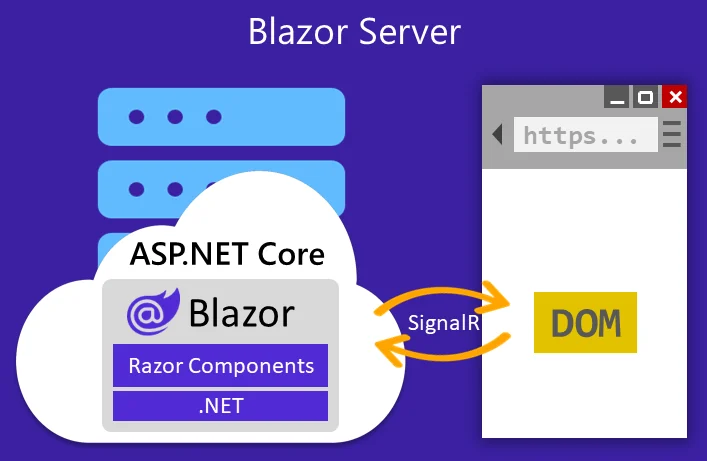
Visual representing Blazor Server connection and state management

Blazor Server | Author: Kjarn | Published: 22 Mar 2026 | Updated: 25 Mar 2026 | Read time: 13 min read

Blazor Server Operations Guide: Connection, State, and Scaling

A production-focused playbook for circuit lifetime, reconnect behavior, state continuity, and scaling decisions in Blazor Server projects.

Read article
Visual representing Blazor WebAssembly loading performance

Blazor WebAssembly | Author: Kjarn | Published: 17 Mar 2026 | Updated: 21 Mar 2026 | Read time: 14 min read

Blazor WebAssembly Performance Guide: Bundle, Cache, and First Load Time

How to improve first-load time in Blazor WebAssembly by balancing bundle strategy, offline tolerance, and disciplined client-side data flow.

Read article
Visual representing .NET observability and telemetry flow

Observability | Author: Kjarn | Published: 26 Feb 2026 | Updated: 1 Mar 2026 | Read time: 12 min read

.NET Observability Guide: Logging, Metrics, Tracing, and OpenTelemetry

A practical observability model for .NET that combines logs, metrics, traces, sampling, and runbooks to shorten incident diagnosis and recovery.

Read article

Rejoining the server...

Rejoin failed, trying again in seconds.

Failed to rejoin.
Please retry or reload the page.

The session has been paused by the server.

Failed to resume the session.
Please retry or reload the page.